Showing posts with label cattlemen. Show all posts

Thursday, October 21, 2010

DON'T GIMLET YOUR HORSE...or YOUR FAITH

On The Trail with
STEPHEN BLY
Copyright©1993,2008


One way to measure the skill of a cowboy in the Old West? Determine how well he takes care of his horse.

A horse provided his job, his travel home, his net worth. The beast became a companion and sometimes an escape route too. Other cowboys didn’t think much of a man who would, without good cause, run a horse down.

In order to save your life, you might need to ask more of your pony than he could safely give. But that was the exception.

One sure sign of a tenderfoot, or a worthless cowhand: when he gimleted a horse, that is, rode him until his back was sore. On the big cattle drives the cowboys avoided this by changing horses several times a day. When traveling from place to place on the same horse, they’d ride a couple hours, climb off, loosen the cinch, then hike a while to give the horse a rest.

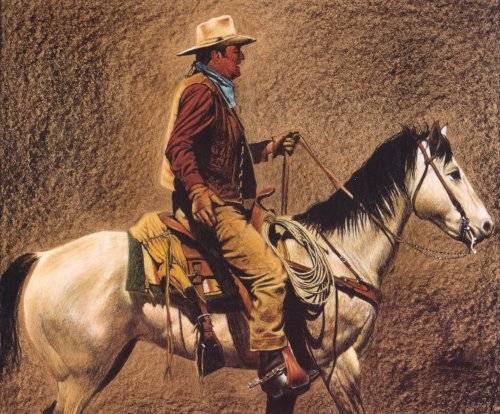
John Wayne
One complaint I have with some western movies and TV shows—a cowboy seldom climbs down to give his horse a break. However, an exception. . .John Wayne does make the point in a dramatic scene in The Searchers.

It just makes good sense to take special care of what keeps you going. The same’s true in the spiritual realm. Your faith keeps you safe, guides you, moves you toward positive goals. So why not take good care of your faith?

St. Paul complained of those who “shipwrecked their faith” (1 Timothy 1:18,19). Shipwrecked faith looks something like a gimleted horse—rundown, misused, devalued because of neglect.

But instead of giving your faith a break, ride it harder. Activate it daily. Study God’s promises. Practice gut-level believing them, one by one. Do some spiritual aerobics. Exercise trust. 

What one thing can you do today to prevent a gimlet of your faith? 

*************

Saturday, April 10, 2010

DOGIES ON THE TRAIL

STEPHEN BLY


Most everyone knows the words to a few western songs. Hum some bars of “Home On The Range” and everyone on your commuter bus over 30 will be able to chime in with “where the deer and the antelope play.” They might also know why it’s important to get “back in the saddle again” because that’s “back where a friend is a friend.” And many have heard “get along little dogie.”

However, some pronounce it ‘little dawgies’ instead of ‘doughies.’ That’s because they don’t understand the word’s origin. A dogie is a scrubby calf that has not wintered well. It’s anemic from the scant food of the cold months. According to a cowboy this calf has lost his mammy and his daddy ran off with another cow. They first got their name in the harsh winters of the 1880s when orphan calves, starving to death, ran around with stomachs so disfigured they looked like they carried wads of sourdough in their bellies. “Dough-guts,” they were called...and since unbranded and orphaned calves could be claimed by any rancher, dough-guts soon slipped to dogies in the vernacular. 

Dogie is not a bad description for followers of Jesus. The Bible claims there's "not many wise, not many mighty, not many noble" (1 Corinthians 1:26). No one's a great catch for Christianity, according to heaven’s standards. But God considers you a treasure anyway. In fact, he scurries around the countryside hunting for spiritual dogies.

The western cattleman perceived more than a scrawny stray when he spied a dogie. He recognized the potential for a fine herd, once they were fed, watered, rested. God sees you the same. Rather than roam a vast spiritual desert, on the verge of perishing alone and abandoned, God seeks you, rounds you up, and makes you his own.

Stephen Bly
Copyright@1993,2007

COMING JUNE 2010: COWBOY FOR A RAINY AFTERNOON

Tuesday, March 09, 2010

THE DALLY MAN


BY STEPHEN BLY


I could tell A.C. Buchanan was a dally man. It wasn’t the bow legs, the tan line across his forehead, or the calloused hands. It was, rather, the missing tip of his thumb that gave him away.

Cattlemen out west can be divided between those who tie their ropes hard and fast and those who dally. One group ties the end of their rope to their saddle horn before they ever leave the corral. For instance, when they rope a steer out on the range, in order to doctor it up, all they have to do is toss a loop over the critter and get their pony to shut it down. The steer dashes toward safety, but is brought down hard when he reaches the end of the rope. This way he’s not lost, unless the rope breaks.